Labels

#makeinindia 2012 2014 a massive threat taken lightly Adam Osborne Airbus Aircraft Alexander Graham Bell animated animation April 26 Arbitrary art from waste assignment AUDIT Bāhubali Brewster Color Bruno saint-Jalmes business Cartoons Character chennai cinema Cinematograph Cockpit color cinematography composers consultants consumer conventions Copyright copyright registration copyright societies Copyrights counterfeits descriptive design designers economy Edison Elridge Johnson Emile Berliner entertainment exploitation of ipr fashion Fictional Character film Forms of Intellectual Property Rights. Franchise future inventions generic marks genericity Gramophone green belt guindy hague Helmet Intellectual property Intellectual Property Exploitation intellectual property rights International IP filings ip asset IP AUDIT IP day theme IP economy IP filings ipindia IPR iprights Jason Zaneboni Kisan Kanya laptop lean LEAN SIX SIGMA TRAINING BY MSME licensor logo logo design logo registration lyrics madrid makeinindia manufacturing hub mayabazaar Merchandise mortgage Movie - movie patents movies Movies- A Global Passion msme-di music music industry musicians Newsletter osborne computers Oyster Chronometer patent patent talk pct pentallectual Percy Douglas Brewster Phonograph piracy plane pledge protection Protective Helmet realproperty Record Player revenue Rolex Awards science secondary meaning six sigma SOFTWARE PROFESSIONALS songs sound recordings Suggestive Trade Dress tradedress Trademark trademark consultants TRADEMARK LICENSE Trademarks tv Two Pesos v. Taco Cabana upcycling US 2923941 value video visusdp2013@gmail.com waste management Waterproof watch website registration windowless windowless jet cockpit Wipo World IP Day 2014 Young Laurates ZTE
Showing posts with label IPR. Show all posts

Friday, 9 December 2016

IP & FASHION - Now Trending


The works emanating from fashion designers and the fashion industry are products of applied intellectual acumen, creativity and skill; all these are intellectual properties capable of protection.

While some of the big players of the fashion industry in India such as “MANISH MALHOTRA, SATYA PAUL, TARUN TAHILIANI, RITU KUMAR, FAB INDIA and BIBA” have taken measures to protect their IP most of them are lagging behind. Yet, many small and medium-sized enterprises pay little attention, if any, to protecting such intellectual assets.

In the current business environment, the primary source of competitive advantage for those in the fashion industry is innovation and original creative expressions. Businesses need to identify such valuable intangible assets in a timely manner, determine their business relevance, and agree on those to be protected and leveraged through the IP system.

In the international scenario lot of importance is being attached to the intellectual property protection by the fashion designers and the same are accurately and promptly protected.

For example, IP rights can exist in an number of creative elements in an article, such as repeating patterns, fabric designs, colours, the overall design or shape of an article, innovative design elements such as zippers, ornamentation and specially designed or technical fabrics etc.,

Some interesting examples are:

The Hermès Kelly Bag and the new Hermès Plume Bag - Hermès is one of the top ten users of the Hague System for the international registration of industrial designs with hundreds of designs registered through the System.


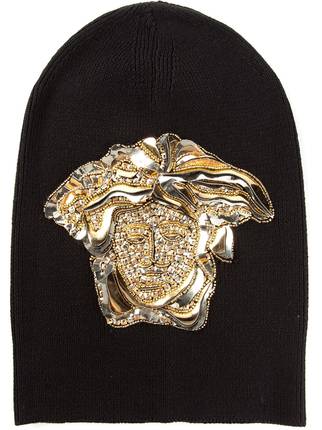
Versace’s medusa motif-

The Vera Wang wedding dress-


Dr. Marten’s boots -


While fashion trends may come and go in the blink of an eye, some never pass. Some of them become classical pieces.

1. “Kelly” Bag, which grew to fame in 1956 after Princess Grace Kelly of Monaco appeared carrying the bag on the cover of LIFE Magazine.

2. The classic Chanel suit – designed by Coco Chanel in the 1930s – is still sold today, for US$5,000 a suit.

Many fashion houses strive to create such classic design pieces. When they succeed, if they have not obtained the appropriate IP protection in time, imitators will be able to ‘free ride’ on their creative work.

Following IP Tools can be used for protection of IP in the Fashion Industry
Copyrights

Design or decoration applied to fabrics or objects to make them aesthetically pleasing or having ornamental quality can qualify for copyright protection.

Eg:  Fabric patterns; images affixed to garments; materials, embroidery, beading, lace, etc., affixed to garments; jewelry designs; and some fanciful costumes are, in fact, eligible for copyright protection.

Brands, Tradedress, Tradenames and Trademarks

The logos and names, the cut or shape of garments, can be protected as trademarks.

Eg: 


Patents:

Newly invented materials used in the manufacture of fashion items or luxury goods, innovative methods of manufacturing these goods could also qualify patent protection.

Eg: Thula – an organic fabric, mulka-mix of khadi and mul fabrics, speedo swim wear – fabric specially designed for swimmers.

Designs

Among the range of IP tools, the protection of industrial designs is the most relevant to the fashion industry. Ornamental or aesthetic aspects can be protected under Design rights, which may relate to a three-dimensional feature, such as the shape of a hat, or a two-dimensional feature, such as a textile print.

Counterfeits and Fashion

It is important to keep in mind that Counterfeits are a significant concern, particularly in the luxury and fashion industry. IP regime is one of the best tools among others to keep a check on counterfeits. IP rights can be enforced and thus rights can be protected.

Fashion Law

The conceptualization of fashion law as a distinct legal field is relatively recent. Though, the term may sound relatively new in the Indian scenario, it’s been actively practiced for quite some time in other jurisdictions of the world. Fashion law is a legal field encompassing issues that arise throughout the life of an article of clothing or a fashion accessory. Fundamental issues in fashion law include intellectual property; business and finance, with subcategories ranging from employment and labor law to real estate; international trade and government regulation, including questions of safety and sustainability; dress codes and religious apparel; consumer culture; privacy and wearable tech; and civil rights. Fashion law also includes related areas such as textile production, modeling, media, and the cosmetics and perfume industries.


Fashion and Luxury products should be sufficiently protected, considering the rapid evolution of fashion; huge financial stake; creativity and not to forget the risk of counterfeits plaguing the fashion industry. 

Friday, 1 July 2016

IP AUDIT AND ITS IMPORTANCE FOR AN ORGANISATION


  • IP Audit is the process of assessing and evaluating the IP Assets of an organization, usually by IP Professionals.
  • It is a systematic review of the IP assets owned, used or acquired by a business.
  • It is the act of identifying, monitoring and valuing the IP assets so as to enable an organization to exploit them to the fullest.
  • The purpose of IP Audit for an organization is to uncover under-utilized IP assets, identify threats and devise informed IP strategies.
  • IP Audit helps in responding appropriately in the event where an organization’s IP is infringed.
  • IP Audit assists use of IP effectively and appropriately.
  • IP Audit identifies an organization’s strengths and weaknesses thereby enabling the realization of full value of the  IP assets.  
  • Ideally, professional IP auditors should conduct an IP Audit. Nevertheless, an internal team within the Organization may also conduct a preliminary IP audit.
  • Knowledge of an Organization’s intellectual property and its value will assist in deciding which type of IP rights to acquire and maintain, and how best to manage the IP assets of the organization.
  • IP Audit results play a major role in making decisions during Mergers and acquisitions.
  • IP Audit can increase revenue by identifying IP that can be licensed to a third party.
  • An IP audit will assist the organization in determining the value of its own IP in order to obtain maximum benefit from license agreements.  The revenue resulting from such licenses has the potential of increasing the market value of the Organization.
  • A well-structured IP portfolio may, in certain circumstances, also be used as collateral. In such cases, lenders will use IP assets to determine the credit worthiness of the Organization.
  • Knowing the value of IP assets will assist an Organization in taking decisions against infringement and in what way this may be done on a case-by-case basis.
  • A well-managed IP register would help you identify obsolete IP assets thereby eliminating IP asset maintenance costs.
  • An IP audit is a relatively simple exercise, but it has a meaningful role in avoiding various circumstances, such as violation of others’ rights, protecting one’s IP/IP rights, minimizing the risk of third party IP violation, clarifying IP ownership issues, etc.
  • It also serves as a guiding tool for maintenance, management and safeguarding of IP rights throughout the life cycle of IP.
  • As Organizations understand the value of their IP Assets, the importance of IP is bound to grow, and thus the need for an IP audit.
  • Conducting periodic IP audits is recommended as that helps the enterprise to keep its IP portfolio up to date.


Wednesday, 16 December 2015

Upcycling : A new lead for new IP's


Recently, an article on Upcycling in The Times of India caught my eye. It was interesting and inspiring. Upcycling is a new and better way to treat trash and waste. It is nothing but upgrading the junk into new and useable products. In other words, reuse (discarded objects or material) in such a way as to create a product of higher quality or value than the original.

Having explained what Upcycling is, my concern is regarding the immense potential for generation of Intellectual Property that Upcycling offers.


"The opportunity to upcycle trash, or turn it into new products, is vast"


Upcycling, also known as creative reuse, is the process of transforming by-products, waste materials, useless and/or unwanted products into new materials or products of better quality or for better environmental value. By Upcycling a waste product, you are giving it a new identity; for example waste water bottles, soft drink bottles, empty jam jars, old fabric etc., can be made into completely new products with no trace of the earlier identity.     


This new products are new intellectual property created and shall be protected using different intellectual property rights. One of the industries where Upcycling is common is fashion industry and interior décor. Mostly such products exhibit artistic craftsmanship. Therefore, qualify for protection under copyright law. Moreover, if a business is started naturally trademarks and branding come into play. Sometimes even a design registration of a product is possible.


Should Upcycling be taken seriously, revenue is sure to come. The potential for developing without any major investment is what is lucrative in this field. This justifies that age-old proverb “Old is Gold”. Turn your old stuff into Gold by creating different Intellectual Property.

Thursday, 19 November 2015

Exploitation of Intellectual Property Rights


Many seem to know, what is Intellectual Property? Different intellectual property rights and what all can be protected through those rights. However, very few seem to know what to do with it. Are we to keep it in the cupboard and forget about it? On the other hand, should we boast about possessing an IP?

Most commonly, IP right holders imagine, "thank god I have registered my IP, no one can copy now. If anyone copies I will drag them to court".

Well, it is important to protect IP from infringers and safeguard your IP. Nevertheless, that is not its only purpose. I would say if IP is not exploited it is equal to an abandoned house.

A house for example, can be sold, mortgaged or could be given for lease and income can be earned. Similarly, IP can also be licensed, pledged or assigned and income can be earned.

No owner of a house would wish to keep it locked if he knows that it will fetch decent income. Therefore, all IP holders should recognize that IP is capable of generating revenue and should exploit to the maximum. In others, words should be treated as a valuable asset.


Wednesday, 22 July 2015

COUNTERFEITING - A MASSIVE THREAT TAKEN LIGHTLY

COUNTERFEITING - A MASSIVE THREAT TAKEN LIGHTLY

Gowthami Reddy D. LLM., [IPR – UK],  IP Attorney, Chennai


When I say “a massive threat taken lightly” it portrays the ignorance of the people on the hazards of counterfeiting. Counterfeits are encouraged by the consumers both intentionally and unintentionally.

Counterfeits are nothing but imitations of original products of famous, well –known and reputed brands. Counterfeiters knowingly or unknowingly breach IP rights. The counterfeit market amounts to billions of Rupees causing irreparable and enormous damage to the original brands. The income from counterfeits is unaccounted money and a threat to our economy. It is also imperative to educate the consumers on IP Rights and the perils of encouraging counterfeits. Consumer awareness is very important to curb counterfeits.

The growth and flourishing of the counterfeit market can be predominantly attributed to the following reasons.

Affordability of Consumer- A consumer who is unable to afford the branded products opt for counterfeits as they are available for less price to showcase their status among their peers.

Ignorance of Consumer- Some consumers cannot differentiate between the original and the fake one, they are duped. While some do not even realize that counterfeits goods involve theft of IP.

The following measures may be taken to improve awareness.
      a. Emphasizing on importance of standards and certificates;
      b. Wide publicity on perils of Counterfeits through mass media;

A complaint may be lodged with the enforcement agencies like Video Piracy cell at Chennai, for the offences relating to counterfeits by the affected persons.

Western countries like USA and UK have strict IPR enforcement regimes to keep a check on counterfeits. Especially, in USA, IP rights are part of fundamental rights; therefore it accords extensive protection unlike in our country.

India can also follow the example of USA and set up a stringent IP regime in accordance to with our local requirements.
  • Government should also come up with a mechanism similar to the one used to differentiate between original and fake currency notes to differentiate between fake and original goods.
  • It’s important that individual investigating agencies also take part in counterfeit investigations and thus assist in eradicating counterfeiters.
  • Government, Non-Government organizations and Judiciary should work in collaboration to eradicate counterfeit market and illicit trade.  


SOME IMPORTANT CONCEPTS IN TRADEMARKS LAW


SOME IMPORTANT CONCEPTS IN TRADEMARKS LAW

Gowthami Reddy.D, LLM.,[ IPR - UK] IP Attorney

Trademarks can fall under different categories based on the relationship between the Mark and the underlying product. Degree of legal protection afforded a particular trademark will depend upon which category it falls within.

A. ARBITRARY OR FANCIFUL MARKS

1. An arbitrary or fanciful mark is a mark that bears no logical relationship to the underlying product.
2. Arbitrary or fanciful marks are inherently distinctive.
3. For example, the words "Exxon," "Kodak," and "Apple" bear no inherent relationship to their underlying products (respectively, gasoline, cameras, or computers). Similarly, the Nike "swoosh" bears no inherent relationship to athletic shoes.
4. They are given a high degree of protection.

B.  SUGGESTIVE MARKS

1.       A suggestive mark is a mark that evokes or suggests a characteristic of the underlying good.
2.       For example, the word "Coppertone" is suggestive of sun-tan lotion, but does not specifically describe the underlying product.
3.       Some exercise of imagination is needed to associate the word with the underlying product. At the same time, however, the word is not totally unrelated to the underlying product.
4.       Like arbitrary or fanciful marks, suggestive marks are inherently distinctive and are given a high degree of protection.

C. DESCRIPTIVE MARKS

1.     A descriptive mark is a mark that directly describes, rather than suggests, a characteristic or quality of the underlying product (e.g. its color, odor, function, dimensions, or ingredients).
2.    For example, "Holiday Inn," "All Bran," and "Vision Center" all describe some aspect of the underlying product or service (respectively, hotel rooms, breakfast cereal, and optical services). They tell us something          
       about the product.
3.   Unlike arbitrary or suggestive marks, descriptive marks are not inherently distinctive.
4.   They are protected only if they have acquired "secondary meaning."

                     SECONDARY MEANING

1.   Descriptive marks must clear this additional hurdle because they are terms that are useful for describing the underlying product.
2.   Giving a particular manufacturer the exclusive right to use the term could confer an unfair advantage.
3.   A descriptive mark acquires secondary meaning when the consuming public primarily associates that mark with a particular producer, rather than the underlying product.
4.   Thus, for example, the term "Holiday Inn" has acquired secondary meaning because the consuming public associates that term with a particular provider of hotel services, and not with hotel services in general.
5.   The public need not be able to identify the specific producer; only that the product or service comes from a single producer.
6.   When trying to determine whether a given term has acquired secondary meaning, courts will often look to the following factors: (1) the amount and manner of advertising; (2) the volume of sales; (3) the length and  
        manner of the term's use; (4) results of consumer surveys.
7.    Zatarain's, Inc. v. Oak Grove Smokehouse, Inc., 698 F.2d 786 (5th Cir. 1983).
8.    A descriptive mark which otherwise would have proven difficult to register may achieve trademark status, after sufficient use has been made to prove secondary meaning under trademark law.
9.    Proof of secondary meaning is an issue only with respect to descriptive marks.
10.  Suggestive, arbitrary and fanciful marks are automatically protected upon registration.
11.  Generic terms are not protected even if they have acquired secondary meaning.

D. GENERIC MARKS

1.   A generic mark is a mark that describes the general category to which the underlying product belongs.
2.   For example, the term "Computer" is a generic term for computer equipment.
3.   Generic marks are entitled to no protection under trademark law.
4.   Thus, a manufacturer selling "Computer" brand computers (or "Apple" brand apples, etc.) would have no exclusive right to use that term with respect to that product.
5.   Generic terms are not protected by trademark law because they are simply too useful for identifying a particular product.
6.   Giving a single manufacturer control over use of the term would give that manufacturer too great a competitive advantage
7.   Under some circumstances, terms that are not originally generic can become generic over time (a process called "genericity"), and thus become unprotected.


                  GENERICITY

1.   Trademark rights can also be lost through genericity.
2.   Sometimes, trademarks that are originally distinctive can become generic over time, thereby losing its trademark protection. Kellogg Co. v. National Biscuit Co., 305 U.S. 111 (1938).
3.   A word will be considered generic when, in the minds of a substantial majority of the public, the word denotes a broad genus or type of product and not a specific source or manufacturer.
4.   Examples of Trademarks that were not originally generic but become generic.

The term "thermos" has become a generic term and is no longer entitled to trademark protection.  Although it once denoted a specific manufacturer, the term now stands for the general type of product.

Similarly, both "aspirin" and "cellophane" have been held to be generic. Bayer Co. v. United Drug Co., 272 F.505 (S.D.N.Y. 1921).

In deciding whether a term is generic, courts will often look to dictionary definitions, the use of the term in newspapers and magazines, and any evidence of attempts by the trademark owner to police its mark.

Tuesday, 24 December 2013

Record Player-Gramophone

Record Player-Gramophone

Patent document - Phonograph- Thomas Alva Edison

Early attempts were made all over Europe and USA by several scientists to invent a better machine to record and play the sounds & music.

Phonograph: 

In the year 1877 Thomas Alva Edison successfully invented his tin-foil machine to record and reproduce sounds.Thomas Edison’s product was marketed under the trade mark “Phonograph”.  The sound was recorded in a round cylinder and then reproduced using the Phonograph.

Graphophone:

Alexander Graham Bell invented another machine to record and reproduce sounds. He named it as “Graphophone” and used wax cylinders which helped him to play the same for so many times. But mass reproduction of the music or sound is impossible because of each cylinder had to be recorded separately.

Gramophone: 

Emile Berliner, a German immigrant working in USA patented a successful machine for sound recording and played the same. Emile Berlin recorded on flat disks or records and stopped to record on Cylinders.The sound/music was etched into the flat disks/records in the form of spiral groove. 

GRAMOPHONE - RECORD PLAYER
GRAMOPHONE 
The record was rotated on the gramophone. The turntable revolved at an even speed with the help of a spring motor. The Spring Motor was patented by Elridge Johnson for the Berliner gramophone. A needle in the tip of the arm was used to read the grooves in the record by vibration. The Gramophone speaker played back the sound/music information recorded in the disk/record.


Hence the name record player got its name from Berliner's disks (records). These records were the first sound recordings which were produced at mass for commercial exploitation. 


Sunday, 1 December 2013

Copyrights and its uses


COPYRIGHTS AND ITS USES
 

THE FOLLOWING RIGHTS ARE AVAILABLE TO THE COPYRIGHT OWNER

a. Rights of reproduction,

b. Communication to the public,

c. Adaptation and translation of the work

TERM OF COPYRIGHT

a. Generally for the period of 60 years

b. In case of original literary, dramatic, musical and artistic works the 60-year period is counted from the year following the death of the author.

ADVANTAGES

1. Valid in more than 100 Countries under Berne Convention.

2. No need to renew the copyright certificate.

3. One time investment for creating rights upto two generation.

4. Exclusive right to use, adapt, sale, translate and copy your own works.

5. If someone else uses your work without your permission, owner can take legal action.

LEGAL ACTIONS

INFRINGEMENTS:

A copyright owner can take legal action against any person who does the following acts with respect to the copyrighted work.

a. Copies for sale or hire or selling or letting them for hire;

b. Distributing infringing copies;

c. Public exhibition of infringing copies by way of trade; and

d. Importation of infringing copies into India.

REMEDIES:

The copyright owner is entitled to the following remedies by way of

1. Injunctions,

2. Damages [in terms of money]

3. Seizure of the infringing materials and

4. Rendering the accounts.