Labels

#makeinindia 2012 2014 a massive threat taken lightly Adam Osborne Airbus Aircraft Alexander Graham Bell animated animation April 26 Arbitrary art from waste assignment AUDIT Bāhubali Brewster Color Bruno saint-Jalmes business Cartoons Character chennai cinema Cinematograph Cockpit color cinematography composers consultants consumer conventions Copyright copyright registration copyright societies Copyrights counterfeits descriptive design designers economy Edison Elridge Johnson Emile Berliner entertainment exploitation of ipr fashion Fictional Character film Forms of Intellectual Property Rights. Franchise future inventions generic marks genericity Gramophone green belt guindy hague Helmet Intellectual property Intellectual Property Exploitation intellectual property rights International IP filings ip asset IP AUDIT IP day theme IP economy IP filings ipindia IPR iprights Jason Zaneboni Kisan Kanya laptop lean LEAN SIX SIGMA TRAINING BY MSME licensor logo logo design logo registration lyrics madrid makeinindia manufacturing hub mayabazaar Merchandise mortgage Movie - movie patents movies Movies- A Global Passion msme-di music music industry musicians Newsletter osborne computers Oyster Chronometer patent patent talk pct pentallectual Percy Douglas Brewster Phonograph piracy plane pledge protection Protective Helmet realproperty Record Player revenue Rolex Awards science secondary meaning six sigma SOFTWARE PROFESSIONALS songs sound recordings Suggestive Trade Dress tradedress Trademark trademark consultants TRADEMARK LICENSE Trademarks tv Two Pesos v. Taco Cabana upcycling US 2923941 value video visusdp2013@gmail.com waste management Waterproof watch website registration windowless windowless jet cockpit Wipo World IP Day 2014 Young Laurates ZTE

Wednesday, 7 October 2020


A NOTE ON COPYRIGHT SOCIETIES – Part 1

We all know how music plays a huge role in many of our lives. For some the day starts with music and ends with music; parties and events cannot happen without music.  Therefore, it’s important to know how to enjoy the music hassle-free without getting into trouble by obtaining proper licenses from the appropriate copyright societies.

According to the Copyright Act, before using recorded music in public it is necessary to obtain the licenses from each and every right owner in the recording. Failing to obtain a license would result in a cognizable and non-bailable offense with huge penalties, which can extend up to 3 years and 2 lakhs respectively under Section 51 and Section 63 of the Copyright Act. Hence, it becomes important to procure the appropriate license from either the duly registered copyright society or the individual owner of the copyright.

What is a copyright society?

According to Section 2(ffd) of the copyright Act, “copyright society” means a society registered under sub-section (3) of section 33;]

 According to Sec 33 of the Copyright Act 1957

o   a copyright Society is formed by authors and owners

o   It requires a minimum of seven members for its formation

o   Only one society can be registered to do business in respect of the same class of works

o   Grant of licenses for any dramatic, artistic, musical, or literary work incorporated in cinematic or sound recording form should be carried out only through a copyright society duly registered under this act.

o   The period for registration granted to a copyright society is five years and it can be renewed before the expiry of this period or at the end of it.

Functions of Copyright Society?

o   Copyright Societies are formed to collectively administer the works of the copyright owners as it is not practically possible for every author or owner to keep a track of all the uses of their work.

o   They keep the  work under better vigilance

o   They collect royalties for the usage of the work

o   The Indian copyright societies have a chance to collaborate with foreign societies and this facilitates the collection of royalties for usage of the work in those countries as well.

It is, therefore, in the interest of copyright owners to join copyright societies to get maximum economic benefit of their works.

The business of issuing or granting license in respect of literary, dramatic, musical, and artistic works incorporated in cinematograph films or sound recordings shall be carried out only through a copyright society duly registered under this Act.

COPYRIGHT SOCIETIES IN INDIA

According to the website of Copyright Office of India, following are the existing copyright societies in India:

  •    For musical works: The Indian Performing Right Society Limited (IPRS)
  •    For sound recording: Phonographic Performance Limited (PPL)
  •    For reprographic (photocopying) works: Indian Reprographic Rights       Organization (IRRO)
  •   For Cinematograph and television films-Society for Copyright Regulation of     Indian Producers of Films and Television (SCRIPT)
  •   For performers (Singers) Rights: Indian Singers Rights Association

In the next part of the post we can look into the working of these copyright societies.

copyright hashtagmusicindustry hashtagcopyrightsocieties hashtagsongs hashtagsoundrecordings hashtaglyrics hashtagiprights hashtagcinema hashtagintellectualpropertyrights hashtagmovies hashtagmusic hashtagentertainment hashtagyoutube hashtagvideo hashtagtv hashtagfilm hashtagmusicians hashtagcomposers


Thursday, 15 June 2017

BĀHUBALI – LEADING THE WAY FOR OPTIMUM INTELLECTUAL PROPERTY EXPLOITATION IN INDIA

BĀHUBALI – LEADING THE WAY FOR OPTIMUM INTELLECTUAL PROPERTY EXPLOITATION IN INDIA


“Bāhubali” - the recent sensation that jolted the entire world cinema with its striking story line, screenplay and above all the mesmerizing character “Bāhubali” and other equally strong supporting characters are products of mind blowing creativity and intellect. The resulting intellectual property has been exploited wisely. This article aims to demonstrate the optimum utilization of intellectual property and the power of intellectual property to generate commercial results.

Hundreds of fictional characters have entertained the human race since time immemorial. Some of the well-known examples are Oliver Twist, Sherlock Homes, James Bond, Chacha Chaudary, Sakthimaan, Chota Bheem, etc. While many are in the public domain, many are still enjoying the protection accorded under the IP law regime. There are multiple Intellectual Property rights (Copyrights, Trademarks, Industrial Designs, Patents, etc.) that facilitate optimum exploitation of the given intellectual property.

A fictional character is like a real character. It has a life of its own.

Characters are used in relation to children's toys, posters, animated cartoons, Video Games, in menus of fast food restaurants, Board Games, adult and children's clothing and all other plausible forms of merchandise. Character development and exploitation of fictional characters are driven by commercial interest and profits.

It is pertinent to take note here that not all proprietors or authors of a fictional character may be aware of the diverse commercial prospects that the character is capable of; that can be achieved by optimum exploitation of the Intellectual Property (fictional character).

The Bāhubali franchise is a cluster of characters that has had a far reaching impact on the audience, shouting the apparent commercial prospects to the creator. Now let's see how these characters are being exploited. 

Firstly, the characters in Bāhubali might have been in the form of a story which itself is protectable as Intellectual Property. The story was then made into a movie which once again being a Cinematograph film is protected under Copyright. Seeing the popularity of the character the author wasted no time in further commercializing the Intellectual Property.   
The author has released the animation series in Amazon® Prime. Now this is a wise decision that led to the creation of graphic characters of those fictional characters. This gives a longer life to the character and has increased the Intellectual Property potential of the fictional character and multiple episodes can be created.

The author has further released merchandise such as mobile phone covers, accessories, etc. There is an exclusive website selling this Merchandise.


A novel “THE RISE OF SIVAGAMI” based on the character Sivagami [Mother of Bāhubali] has been written by Anand Nilakantan and published by Westland (Tata Group). The novel is a prequel to the movie.


Likewise, each character in the Bāhubali franchise is an Intellectual Property in itself and is capable of leading to more Intellectual Property creations.

The recent video game is also an interesting addition to the Bāhubali Intellectual Property exploitation saga.

The whole movie consists of different creative elements apart from these fictional characters which can be a part of a different Intellectual Property discussion all together.

There may be numerous precedents of exploitation of Intellectual Property in a fictional character. Nevertheless, Bāhubali stands out as one of its kind, leading the way for optimum intellectual property exploitation in India.


Friday, 9 December 2016

IP & FASHION - Now Trending


The works emanating from fashion designers and the fashion industry are products of applied intellectual acumen, creativity and skill; all these are intellectual properties capable of protection.

While some of the big players of the fashion industry in India such as “MANISH MALHOTRA, SATYA PAUL, TARUN TAHILIANI, RITU KUMAR, FAB INDIA and BIBA” have taken measures to protect their IP most of them are lagging behind. Yet, many small and medium-sized enterprises pay little attention, if any, to protecting such intellectual assets.

In the current business environment, the primary source of competitive advantage for those in the fashion industry is innovation and original creative expressions. Businesses need to identify such valuable intangible assets in a timely manner, determine their business relevance, and agree on those to be protected and leveraged through the IP system.

In the international scenario lot of importance is being attached to the intellectual property protection by the fashion designers and the same are accurately and promptly protected.

For example, IP rights can exist in an number of creative elements in an article, such as repeating patterns, fabric designs, colours, the overall design or shape of an article, innovative design elements such as zippers, ornamentation and specially designed or technical fabrics etc.,

Some interesting examples are:

The Hermès Kelly Bag and the new Hermès Plume Bag - Hermès is one of the top ten users of the Hague System for the international registration of industrial designs with hundreds of designs registered through the System.


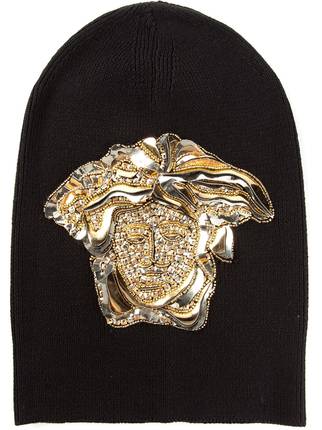
Versace’s medusa motif-


The Vera Wang wedding dress-


Dr. Marten’s boots -


While fashion trends may come and go in the blink of an eye, some never pass. Some of them become classical pieces.

1. “Kelly” Bag, which grew to fame in 1956 after Princess Grace Kelly of Monaco appeared carrying the bag on the cover of LIFE Magazine.

2. The classic Chanel suit – designed by Coco Chanel in the 1930s – is still sold today, for US$5,000 a suit.

Many fashion houses strive to create such classic design pieces. When they succeed, if they have not obtained the appropriate IP protection in time, imitators will be able to ‘free ride’ on their creative work.

Following IP Tools can be used for protection of IP in the Fashion Industry
Copyrights

Design or decoration applied to fabrics or objects to make them aesthetically pleasing or having ornamental quality can qualify for copyright protection.

Eg:  Fabric patterns; images affixed to garments; materials, embroidery, beading, lace, etc., affixed to garments; jewelry designs; and some fanciful costumes are, in fact, eligible for copyright protection.

Brands, Tradedress, Tradenames and Trademarks

The logos and names, the cut or shape of garments, can be protected as trademarks.

Eg: 


Patents:

Newly invented materials used in the manufacture of fashion items or luxury goods, innovative methods of manufacturing these goods could also qualify patent protection.

Eg: Thula – an organic fabric, mulka-mix of khadi and mul fabrics, speedo swim wear – fabric specially designed for swimmers.

Designs

Among the range of IP tools, the protection of industrial designs is the most relevant to the fashion industry. Ornamental or aesthetic aspects can be protected under Design rights, which may relate to a three-dimensional feature, such as the shape of a hat, or a two-dimensional feature, such as a textile print.

Counterfeits and Fashion

It is important to keep in mind that Counterfeits are a significant concern, particularly in the luxury and fashion industry. IP regime is one of the best tools among others to keep a check on counterfeits. IP rights can be enforced and thus rights can be protected.

Fashion Law

The conceptualization of fashion law as a distinct legal field is relatively recent. Though, the term may sound relatively new in the Indian scenario, it’s been actively practiced for quite some time in other jurisdictions of the world. Fashion law is a legal field encompassing issues that arise throughout the life of an article of clothing or a fashion accessory. Fundamental issues in fashion law include intellectual property; business and finance, with subcategories ranging from employment and labor law to real estate; international trade and government regulation, including questions of safety and sustainability; dress codes and religious apparel; consumer culture; privacy and wearable tech; and civil rights. Fashion law also includes related areas such as textile production, modeling, media, and the cosmetics and perfume industries.


Fashion and Luxury products should be sufficiently protected, considering the rapid evolution of fashion; huge financial stake; creativity and not to forget the risk of counterfeits plaguing the fashion industry.